Table of contents
Land management requires strategic decisions when dealing with heavy vegetation, brush, and debris. Whether revitalizing overgrown property or preparing land for construction, selecting the right equipment can make all the difference in efficiency and results. Discover the key distinctions between mulchers and chippers to ensure optimal land maintenance and productivity in the sections that follow.
Understanding mulchers
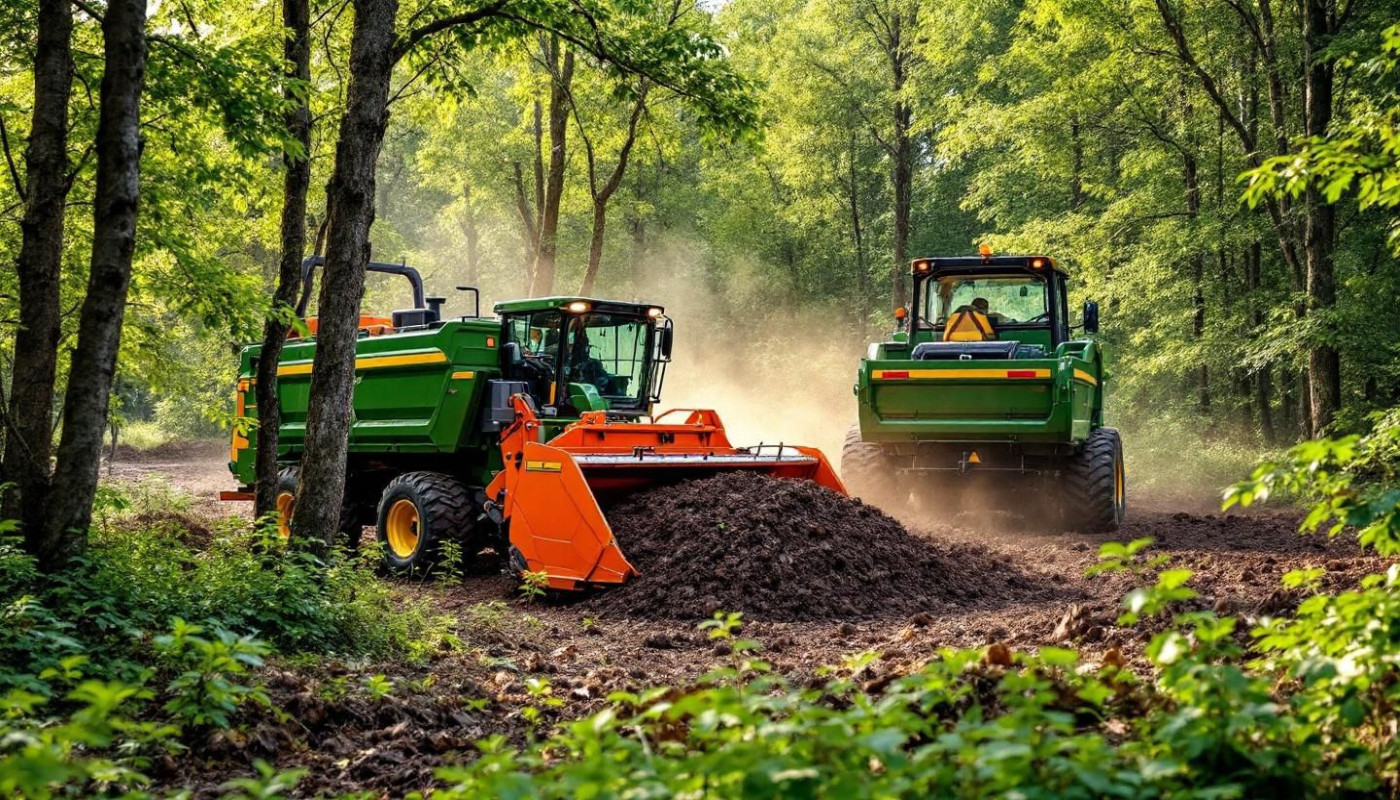
A mulcher is a specialized machine designed for effective land clearing and vegetation management, utilizing advanced components like a cutting drum and hydraulic drive to efficiently process brush, undergrowth, and small trees. The primary function of a mulcher involves reducing organic material into fine, uniform mulch, which enhances soil health and promotes forest maintenance. During the mulching process, the cutting drum rotates at high speeds, shredding vegetation into consistent mulch, while the hydraulic drive ensures optimal power and control for various terrain conditions. This approach not only improves brush removal efficiency but also minimizes soil disturbance compared to traditional methods.
Projects that benefit most from mulchers include large-scale land clearing operations, right-of-way maintenance, wildfire prevention zones, and habitat restoration initiatives. Mulchers excel in environments where rapid brush removal and control over mulch consistency are desired, such as utility line corridors, trails, and firebreaks. Their ability to process diverse vegetation types in a single pass makes them a preferred choice for professional land management consultants seeking sustainable solutions for forest maintenance and long-term ecosystem health.
Exploring chippers
In landscape maintenance and sustainable land care, wood chippers play a pivotal role by efficiently transforming felled branches, logs, and tree limbs into manageable wood chips. The feed chute serves as the entry point for organic debris, guiding branches toward the rotor mechanism—typically equipped with sharp blades or hammers—that rapidly breaks down the material. This process not only facilitates organic debris disposal but also produces uniform chip size suitable for mulching, composting, or as a ground cover. Chippers are engineered to handle substantial volumes of woody material, making them indispensable for tree limb reduction after storm damage, routine pruning, and property clearance projects.
Certified arborists prioritize chipper safety when operating these powerful machines, emphasizing the use of safety gear and adherence to operational protocols. Feed chute design minimizes accidental contact with moving parts, and modern units often include emergency shut-off features to further reduce risk. By converting bulky branches into chipped material, wood chipping supports waste minimization and enhances on-site resource reuse, a cornerstone of sustainable land management. Implementing regular maintenance and proper technique ensures machinery longevity and worker safety, positioning chippers as a core tool for efficient organic debris disposal across residential, commercial, and municipal settings.
Comparing mulchers and chippers
When conducting an equipment comparison for land management tools, understanding the distinctions between mulchers and chippers is key to optimizing vegetation processing. Mulchers excel in rapidly reducing brush, undergrowth, and small trees into a uniform mulch layer, delivering high material throughput and superior operational efficiency in areas with dense, low-diameter vegetation. Their robust cutting mechanisms handle irregular ground conditions, making them especially suitable for uneven or sloped terrain. In contrast, chippers are engineered for processing larger-diameter woody material, producing chip-sized end-product specification ideal for biomass or transport. Their processing capacity is best utilized in environments where debris is already separated and sorted by size, such as after selective logging or storm cleanup.
Evaluating terrain suitability further distinguishes these land management tools. Mulchers maintain steady performance over stony, rugged, or hilly terrain where maneuverability and consistent ground contact are required. Their ability to mulch material in situ minimizes the need for additional hauling or cleanup. Chippers, while offering precise control over chip size and volume, demand pre-sorted feedstock and are less effective on uneven ground due to their static operation and mobility limitations. For landowners prioritizing rapid area coverage and minimal site disturbance, mulchers are often preferred. Where the end-goal centers on producing uniform wood chips for commercial or ecological use, chippers provide a more tailored solution despite the need for greater site preparation and feedstock management.
Choosing the right equipment
Effective equipment selection plays a pivotal role in land project planning, especially when choosing between a mulcher and a chipper for efficient land management. Begin with a thorough project assessment, considering the scale of the terrain, density of vegetation, and the end-result required—mulchers are ideal for ground-level clearing and creating mulch from underbrush, while chippers are suited for converting branches and larger woody debris into chips suitable for landscaping or biomass applications. Aligning these project specifications with available equipment ensures the right tool is matched to the job, eliminating inefficiency and resource waste.
Safety guidelines must underpin every equipment choice; a robust risk assessment prior to work commencement is non-negotiable, particularly for projects involving steep slopes or proximity to power lines. Operators need to be versed in the unique hazards associated with each machine, whether it is the rotating teeth of a mulcher or the feed mechanisms of a chipper. Adequate protective gear, adherence to manufacturer instructions, and a clear site safety protocol minimize accidents and create a safe working environment for all crew members involved in land management activities.
Ongoing maintenance requirements should be factored into the planning stage, as both mulchers and chippers demand a consistent maintenance schedule to remain operational and safe. Regular inspection of blades, lubrication of moving parts, and timely replacement of worn components prolong equipment life and reduce costly downtime mid-project. For those seeking guidance and detailed product information tailored to diverse land management scenarios, navigate to this site for comprehensive resources and expert advice on selecting the most suitable machinery for your next land project.
Maximizing equipment efficiency
Maximizing equipment efficiency in land management relies on a strategic approach to preventive maintenance, operator certification, and adherence to land clearing best practices. Regularly scheduled preventive maintenance is the backbone of machinery longevity; this includes routine inspections of wear-prone components such as blades, belts, and hydraulic systems, along with timely lubrication and replacement of filters. Operator safety is enhanced when individuals complete rigorous operator certification programs, which not only deepen understanding of machinery controls but also reduce the likelihood of accidents or costly errors.
Focusing on performance optimization requires consistent monitoring of equipment load, ensuring that mulchers and chippers are not pushed beyond their intended capacity. Operators should follow the manufacturer’s recommendations on feed size and avoid overloading the intake, which can decrease output and increase wear on internal parts. Effective land clearing best practices also include keeping work areas clear of debris and obstacles, as well as employing spotters for improved visibility and communication during operation. Maintaining a clean workspace contributes directly to both machinery longevity and operator safety.
For optimal equipment efficiency, implement a robust logging system to track routine maintenance, report unusual sounds or vibrations promptly, and ensure all safety shields and guards are in place. Investing in ongoing training for both new and experienced operators strengthens adherence to safety protocols and machinery care standards, creating an environment where equipment, operators, and land management goals are all protected. These maintenance tips and safety measures are indispensable for achieving superior results in land clearing operations while safeguarding valuable assets.
Similar

The Unexpected Beauty of Desert Landscaping

Sustainable Materials Transforming Home Renovation
The Unexpected Beauty of Desert Landscaping

The Evolution Of Graffiti: From Street Art To Upscale Interior Design
